


7 eCommerce Trends in Mexico for 2026 That Your Business Can't Ignore
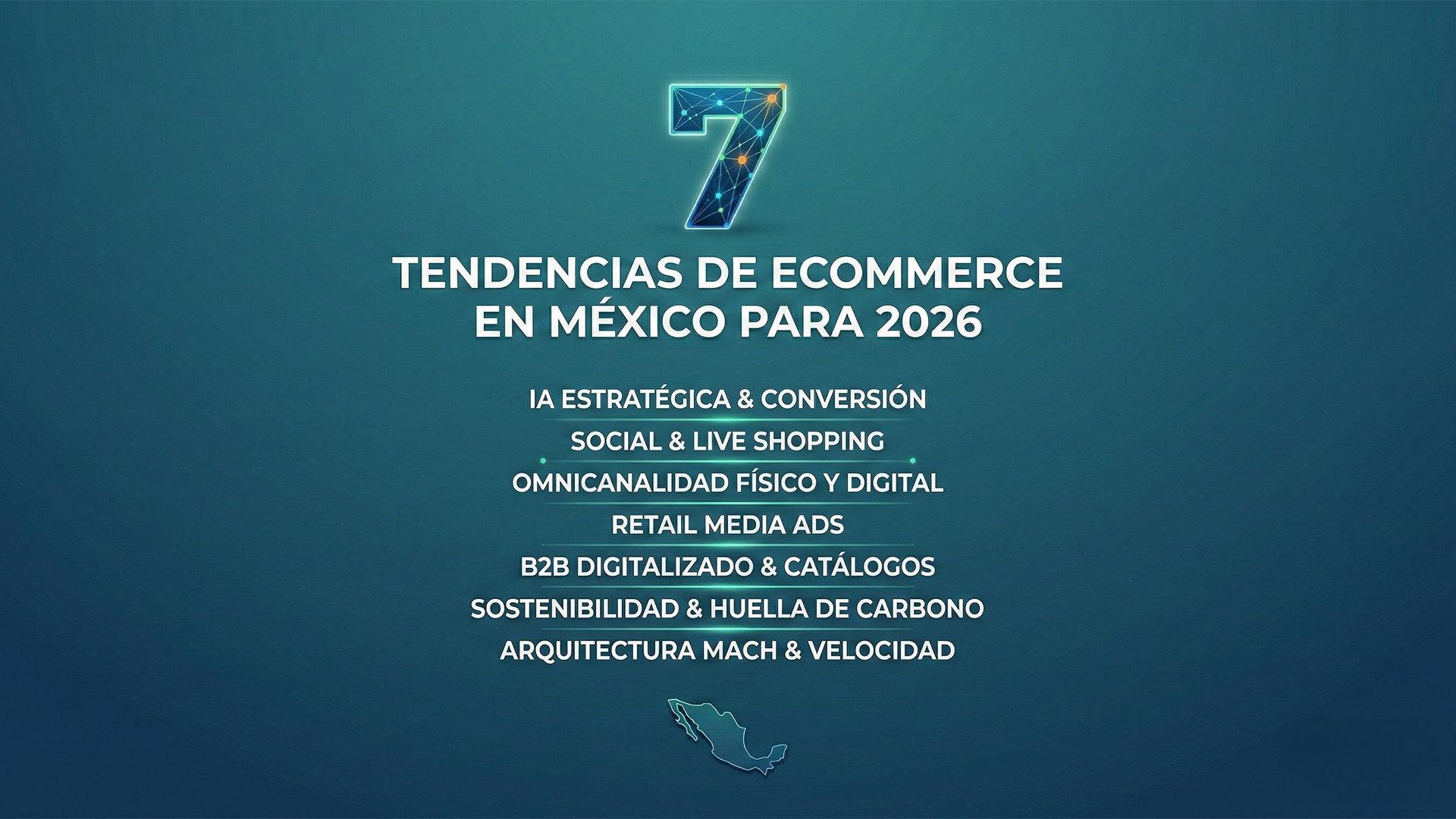
7 eCommerce Trends in Mexico for 2026 That Your Business Can't Ignore
E-commerce in Mexico is experiencing an unprecedented acceleration. With a volume that reached US $97 billion in 2024 and projections that point to US $184 billion by 2027, the country is consolidating its position as the second largest digital market in Latin America. More than 110 million Mexicans have access to the internet, and 59.5% of those over 16 make weekly online purchases.
But 2026 will not be a year of experimentation, but of consolidation. Companies that identify and adopt the right trends will be able to capitalize on this growth. Those that don't will face less patient clients and increasingly professional competition. These are the 7 trends that will define ecommerce in Mexico this year.
1. Artificial intelligence goes from novelty to strategy
During 2025, generative AI exploded in the digital ecosystem. In 2026, all brands will use it, but the difference will be in how they integrate it strategically. Predictive algorithms make it possible to customize supply, anticipate demand and reduce returns. Businesses that implement intelligent shopping assistants, contextual chatbots and advanced recommendation engines could increase their conversion rates by up to 30%.
For B2B commerce, AI also transforms the experience: automatic quotators, inventory prediction, and automated order flows that previously required human intervention.
2. Social commerce and live shopping are consolidated as sales channels
TikTok Shop, Instagram Shopping and Facebook Marketplace aren't just discovery channels anymore: they're conversion channels. The AMVO confirms that these platforms are increasingly decisive in Mexican consumer purchasing decisions, especially in categories such as beauty, fashion and personal care.
Live shopping, where a presenter shows products on live stream with direct purchase, continues to grow in Mexico. Brands that integrate these channels into their omnichannel strategy will have a significant competitive advantage.
3. Omnichannel is no longer optional
The Mexican consumer expects total coherence between the digital and the physical: they want to buy online, receive it quickly and have full visibility of their order. Fast deliveries, flexible payment methods and simple return policies are no longer differentiators, they are minimum requirements.
This places intelligent logistics and flexible technological architecture at the center of the strategy. Platforms with headless and composable architecture allow connecting multiple points of contact (web, app, physical store, marketplace) from a single backend, something that monolithic platforms simply cannot offer with the same agility.
4. Retail media: retailers become advertising platforms
In 2025, retail media already accounted for more than 20% of digital investment in Mexico. By 2026, it is estimated to reach 30-35%, driven by Amazon Ads, Mercado Ads, Walmart Connect and Coppel Media. This trend transforms retailers into advertising platforms that monetize their audiences while offering brands access to consumers with high purchase intent.
For companies with their own e-commerce, this means a new source of income and, at the same time, greater competitive pressure in marketplaces.
5. B2B ecommerce finally takes off in Mexico
While B2C dominates conversations, B2B e-commerce in Mexico is undergoing a full transformation. Industrial companies, distributors and manufacturers are digitizing their catalogs, automating order processes and offering buying experiences similar to those of B2C: self-service portals, personalized prices per customer and real-time tracking.
Platforms such as commercetools and BigCommerce B2B Edition are enabling this transformation with flexible architectures that adapt to the complexities of business-to-business commerce.
6. Sustainability as a purchasing decision factor
Younger generations prioritize brands with genuine environmental commitment. In Mexico, SMEs are also adding up: less paper, efficient digital processes and cloud operations. Systems that allow you to automate reports and reduce your operational footprint will be a fundamental part of the sustainable trade ecosystem.
7. Technological architecture as a competitive advantage
Perhaps the quietest but most transformative trend: the infrastructure on which ecommerce is built determines the speed of innovation. Brands that operate on monolithic platforms face slow development cycles, costly updates, and limitations to integrate new technologies.
In contrast, MACH (Microservices, API-First, Cloud-native, Headless) architectures allow new experiences to be launched up to 3 times faster, integrate AI tools without friction, and scale without rewriting the entire system. In a market that grows at 24% per year, that agility makes the difference between leading and falling behind.
Is your platform ready for 2026?
The growth of e-commerce in Mexico is an enormous opportunity, but only for those who have the right technological infrastructure and strategy. At Edgebound, we help companies build digital commerce architectures that are flexible, scalable and ready for the coming trends.
If you want to evaluate if your current platform can sustain your growth, request a free Health Check Assessment and discover where the opportunities for improvement are.
Contact us to discuss how our team
can boost your digital commerce.
Notas Relacionadas




Blockchain in eCommerce.
10/10/2023
Trends

Contact us to discuss how our team
can boost your digital commerce.


