


B2C vs B2B in ecommerce: good practices you should adopt
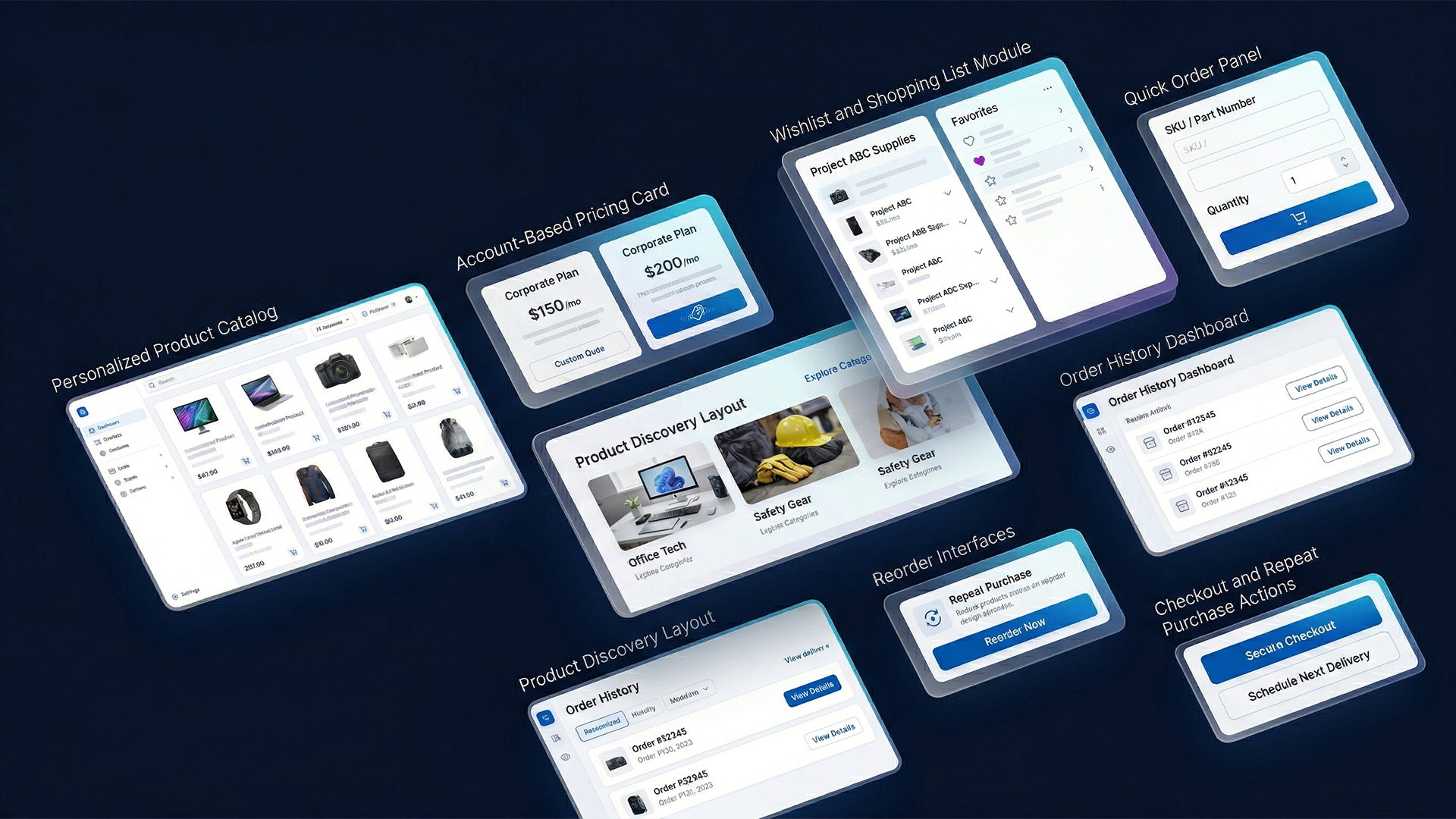
B2C vs B2B in ecommerce: good practices you should adopt (even if you change their name)
For years, B2B and B2C ecommerce have been treated as completely different models. However, in practice, the line is increasingly blurred. Today, B2B decision makers are also demanding digital consumers in their personal lives. They're used to simple, fast and personalized experiences. And now they expect exactly the same thing in their professional environment.
And here's where an uncomfortable truth for many companies comes in:
The B2C experience is no longer a “nice to have” in B2B, it's the new baseline.
As the phrase goes: “potato - potato”.
You can change the name... but not the user's expectation.
The new mindset: from processes to experiences
Traditionally, B2B ecommerce has prioritized internal processes over experience:
- operational efficiency
- Bureaucratic processes
- commercial complexity
While B2C has optimized every point of the customer journey to obsessively maximize conversion:
- the user experience
- The speed of decision
- The conversion
Today, the gap is closing.
The B2B user expects to buy as a purchase on Amazon, but with business conditions.
5 B2C ecommerce best practices you should implement in B2B
1. Wishlist (B2C) vs Shopping List (B2B)
Even if the name changes, the logic is the same: to facilitate the repurchase.
In B2C: Save products for later
In B2B: recurring shopping lists by customer or area
B2B CX Insights:
It's not a feature, it's a repurchase accelerator.
Business impact:
- Reduce friction in recurring orders
- Increase purchase frequency
- Facilitates purchases for different roles within the company
Best practice:
It allows multiple lists, quick editing and one-click purchases.
2. Optimized checkout vs Quick Order
In B2C, the goal is to close the purchase in the fewest number of steps.
In B2B, the focus is on operational speed.
B2B CX Insights:
The user doesn't want to “buy”, he wants Solve quickly.
Business impact:
- Reduce abandonment
- Improves customer operational efficiency
- Increase average ticket
Best practice:
- Inputs by SKU
- Upload by CSV
- Smart Autocomplete
3. Customization vs Catalog and Dynamic Pricing
In B2C:
- personalized recommendations
In B2B:
- prices per customer, contracts, segmented catalogs
B2B CX Insights:
Personalization in B2B isn't marketing, it's commercial relevance.
Business impact:
- Improve conversion
- Strengthen business relationship
- Avoid buying errors
Best practice:
- Show only relevant products
- Real-time contextual pricing
- Visible purchase history
4. Intuitive UX vs B2B Self-Service
B2C ecommerce has perfected simple navigation.
B2B needs to bring that to self-service portals.
B2B CX Insights:
The best support is the one you don't need.
Business impact:
- Reduces load on commercial equipment
- Increases customer autonomy
- Improves satisfaction (and retention)
Best practice:
- Clear dashboards
- Reorder in 1 click
- Real-time order tracking
5. Reviews vs Information-based trust
The B2C user trusts reviews.
The B2B buyer trusts data.
B2B CX Insights:
It reduces uncertainty and accelerates the purchase decision.
Business impact:
- Reduces friction in decision-making
- Accelerate sales cycles
- Increase trust
Best practice:
- Clear technical information
- Downloadable documentation
- Social proof (cases, logos, industries)
The real takeaway: don't copy features, adopt principles
The most common mistake is trying to “copy” B2C into B2B as is.
The strategic move is not to replicate, it is reinterpret.
Because in the end:
- Wishlist or Shopping List
- Checkout or Quick Order
- Reviews or Technical Data Sheets
They are different labels to solve the same need: to facilitate the decision and reduce friction.
What's coming forward?
The companies that lead B2B ecommerce in the coming years will not be the ones with the most features, but the ones that best understand this:
Experience is the new competitive differentiator.
And that involves:
- Design for users, not for organization charts
- Reduce friction in every interaction
- Think about journeys, not about systems
Looking at it with a vision of the future, there are three clear trends:
1. B2C-like experiences as standard
It is no longer a differentiator, it is a minimum requirement.
2. Self-service as the main channel
Customers want autonomy, not intermediation.
3. Deep customization
Not just marketing, but real time business conditions.
Conclusion
If your B2B ecommerce today:
- Depends too much on the sales team
- has complex processes
- or generates friction in the repurchase
Then you don't need to reinvent everything.
You probably just need to take a closer look at B2C... and translate it into your context.
Because at the end of the day:
“potato — potato”... but the customer always chooses the easiest path.
Contact us to discuss how our team
can boost your digital commerce.
Notas Relacionadas


Contact us to discuss how our team
can boost your digital commerce.


