


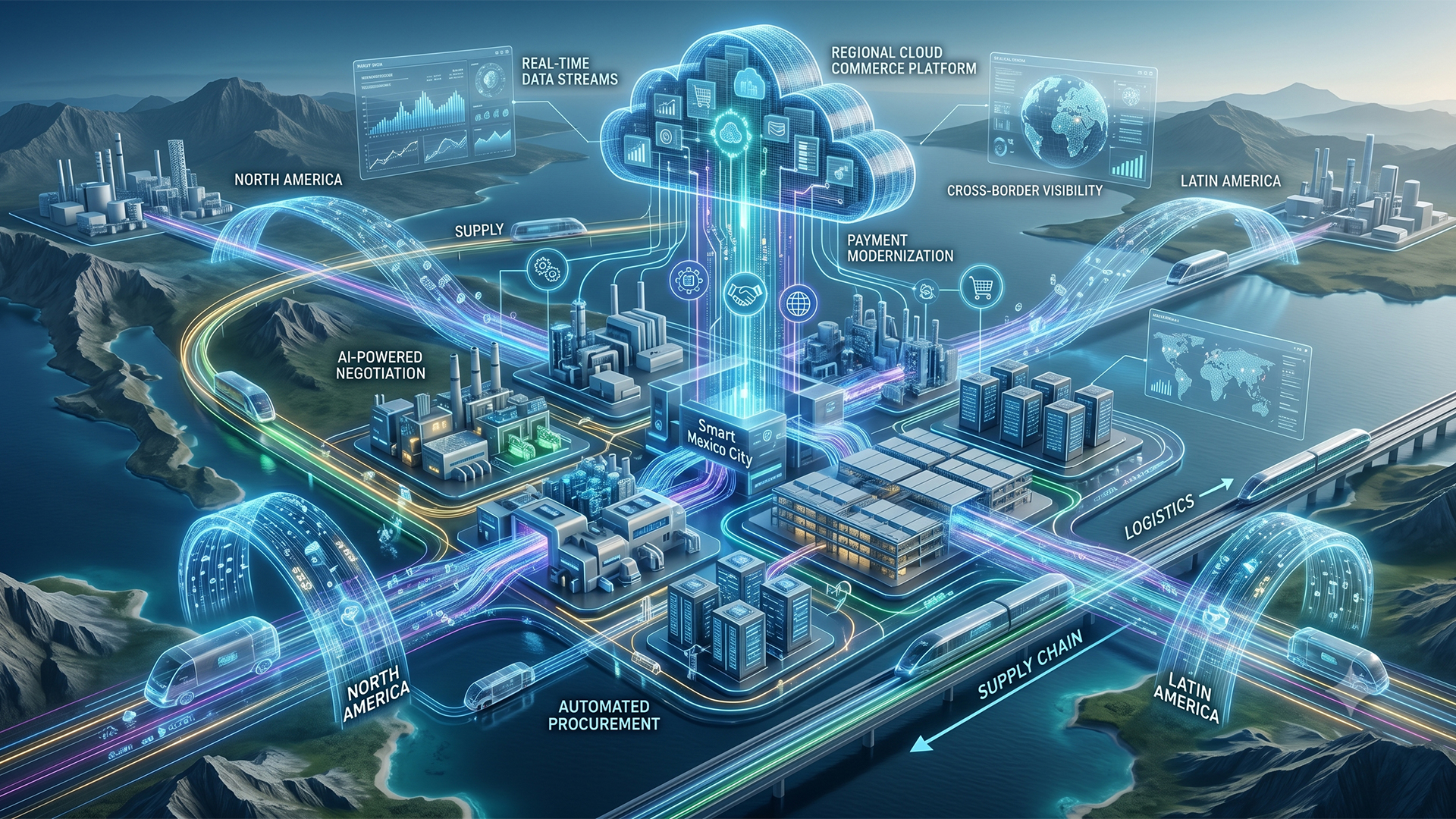
How Businesses Are Scaling Their International Sales in 2026
For years, B2B international trade was reserved for large corporations with complex operations and specialized teams.
In 2026, the growth of B2B eCommerce, nearshoring, and the accelerated digitalization of supply chains are completely transforming how Mexican businesses sell internationally.
Today, manufacturers, distributors, and wholesale businesses in Mexico can close international deals from digital platforms, automate commercial processes, and expand into new markets without exclusively relying on traditional export models.
What is Cross-Border B2B?
Cross-Border B2B refers to commercial operations between businesses in different countries via digital channels.
In other words:
it's not just about selling products online, but about digitizing international business relationships.
Why Mexico Became Strategic for International B2B
Mexico is experiencing one of the most significant periods for international trade in decades.
Factors such as:
- nearshoring,
- trade tensions between the United States and Asia,
- the relocation of manufacturing,
- and the country's industrial growth,
have turned Mexico into a strategic hub for B2B operations.
Many global companies are now looking for:
- Mexican suppliers,
- regional manufacturers,
- local distributors,
- and supply chains closer to North America.
This opened up a huge opportunity for Mexican companies that previously operated only domestically.
The new B2B buyer has completely changed
One of the biggest market shifts is in business buyer behavior.
By 2026, B2B buyers expect digital experiences similar to those in B2C e-commerce.
They want:
- quick quotes,
- clear digital catalogs,
- self-service,
- inventory visibility,
- order tracking,
- and simple processes.
The era of relying solely on phone calls, endless PDFs, and manual processes is fading.
Companies that still operate this way are starting to lose competitiveness against more digitized organizations.
How Cross-Border is Transforming B2B E-commerce in Mexico
Cross-border B2B is no longer just traditional exporting.
Now it involves:
- B2B portals,
- industrial marketplaces,
- commercial automation,
- ERP integrations,
- and omnichannel operations.
The most advanced companies are building complete digital ecosystems to serve international buyers.
The biggest opportunities for Mexican companies
1. Access to international buyers
Digital platforms remove many barriers to entry.
Today, a Mexican company can:
- sell to distributors in the United States,
- serve buyers in Latin America,
- or integrate into global supply chains.
All from a digital infrastructure.
2. More efficient business operations
Digital Cross-Border enables the automation of processes like:
- quotes,
- recurring orders,
- customer validation,
- personalized pricing,
- and inventory management.
This reduces operational friction and accelerates deal closures.
3. Increased international competitiveness
Many Mexican companies have significant advantages:
- logistical proximity to the United States,
- competitive costs,
- manufacturing capacity,
- and faster delivery times compared to Asia.
When these advantages are combined with digital technology, the growth potential is amplified.
The Key Challenges of Cross-Border B2B
While the opportunity is vast, many companies still face significant challenges.
1. Insufficiently Digitized Internal Processes
One of the main problems is that many B2B operations still rely on:
- Excel,
- manual emails,
- slow approvals,
- and siloed processes.
The problem is that international buyers expect speed and transparency.
Without internal digitalization, scaling becomes very difficult.
2. Logistical and Customs Complexity
In B2B, logistics is much more complex than in traditional retail.
Consider:
- imports,
- regulations,
- documentation,
- taxes,
- Incoterms,
- and handling large volumes.
Furthermore, any delay can impact entire operations for international clients.
3. Outdated B2B Experiences
Many B2B portals still offer slow and unintuitive experiences.
By 2026, buyers expect:
- modern UX,
- speed,
- mobile experience,
- self-service,
- and personalization.
The digital standard has risen considerably.
4. Lack of Technological Integration
One of the biggest challenges in Cross-Border B2B is connecting multiple systems:
- ERP,
- CRM,
- inventory,
- pricing,
- logistics,
- and invoicing.
Companies operating with disconnected systems generate errors, delays, and poor customer experiences.
The role of artificial intelligence in international B2B
AI is greatly accelerating the evolution of Cross-Border B2B.
Today, it's already used for:
- demand forecasting,
- quote automation,
- dynamic pricing,
- purchase recommendations,
- risk detection,
- and automated support.
Additionally, companies are using artificial intelligence to analyze international buyer behavior and optimize business strategies by region.
What a Mexican company needs to compete globally
By 2026, it's no longer enough to have an online catalog.
B2B companies that are truly growing internationally typically have:
- robust B2B platforms,
- modern shopping experience,
- business automation,
- operational integration,
- logistics strategy,
- and data analytics.
Successful Cross Border operations happen when technology, operations, and business strategy work together.
The future of B2B in Mexico will be digital and international
The transformation of B2B commerce is just beginning.
Companies that successfully digitize their operations and build Cross Border capabilities will have a huge advantage over the rest of the market.
Because by 2026, competing will no longer just mean having the best price.
It means:
- operating faster,
- selling more efficiently,
- and building global business relationships from digital platforms.
Conclusion
Cross Border B2B represents one of the greatest growth opportunities for Mexican companies this decade.
The combination of:
- nearshoring,
- digitalization,
- automation,
- and international expansion,
is redefining how businesses sell and scale.
Organizations that start building B2B digital infrastructure today will be far better positioned to compete in the coming years.
Because the future of international trade no longer depends solely on exporting products.
It depends on creating digital commerce experiences capable of operating globally.
Contact us to discuss how our team
can boost your digital commerce.
Notas Relacionadas




Blockchain in eCommerce.
10/10/2023
Trends

Contact us to discuss how our team
can boost your digital commerce.


