


E-commerce cash flow: why it's the biggest challenge (and how to solve it)

On paper, an e-commerce business can look very profitable: good sales, good traffic, products that move. But in reality, many digital businesses face a silent problem that decides if they survive or not: cash flow.
Unlike physical or traditional stores, e-commerce has times, costs and processes that make money Come in later, but the expenses Come out first. This combination makes cash flow one of the biggest financial challenges in the industry.
Here's why this is happening and how you can solve it in a practical way.
Why is cash flow so complicated in e-commerce?
1) Payment gateways release money later
Even if you sell today, the money doesn't arrive today. Some platforms usually pay 7, 14 or up to 30 days later of the sale.
This delays your liquidity, especially when you need that money to buy inventory or cover expenses.
2) Logistics is paid in advance
In e-commerce, the main costs occur before charging:
- Packaging
- Shipping Guides
- Logistics or fulfillment
- Storage
- Pick & pack
Your business spends Before to receive the actual income.
3) Returns and refunds directly affect the flow
When a customer returns a product, you don't just lose the sale.
You've also already paid:
- One-way shipping
- The packaging
- The marketplace commission
- The processing time
- Sometimes return shipping
This makes cash flow unpredictable.
4) Marketing campaigns require prior investment
Your business needs to invest in advertising Before to see the results:
- Announcements
- Content
- Photograph
- Seasonal campaigns
If left unchecked, investment in ads can “eat” your cash.
5) Inventory immobilizes money
Every product in your warehouse is money that hasn't been converted to cash. If you buy too much inventory, your cash drawer runs out of cash.
How to solve the cash flow challenge in e-commerce
Here I share practical solutions that work both in small businesses and in large scale operations.
1. Calculate your fixed and variable expenses in advance
Before growing or launching campaigns, identify how much money you need each month to operate. This helps you know how much minimum “cash” you need so you don't run out of cash.
2. Keep a cash cushion equivalent to 1 or 2 months' worth of expenses
E-commerce is unpredictable. Having an emergency fund prevents a bad streak or late payment from leaving you without operational capacity.
3. Negotiate better deadlines with your suppliers
Extending your payment period with suppliers allows you to have more time before disbursing money. Even 7 or 15 days help a lot.
4. Plan your inventory purchases with data, not intuition
Buy according to:
- Rotation
- Season
- Sales History
- Trends
Avoid storing money on products that are slow to sell.
5. Control your marketing investments
Not every advertisement that generates sales generates profit.
Key Tips:
- Set a spending limit per campaign.
- Adjust ads daily during peak seasons.
- Pause campaigns that don't return.
Uncontrolled marketing is one of the main reasons for lack of cash.
6. Reduce the financial impact of returns
You can do this with:
- Clearer descriptions
- Better photos
- More specific exchange and return policies
- Stronger packaging
Every return not only affects sales, but also direct cash flow.
7. Use tools that automate reconciliation and collections
This helps you really know how much money is going in and out.
Many companies do not know their real liquidity because the reconcilations are done by hand and late.
Conclusion
E-commerce isn't just about selling more: it's about Get paid on time, control expenses and prevent money from getting stuck in inventory, returns or marketing campaigns.
Managing cash flow strategically is what distinguishes a store that grows sustainably from one that lives daily without knowing if it will be able to operate next month.
With small actions, discipline and good financial planning, it is totally possible to have a profitable e-commerce with stable liquidity throughout the year.
Contact us to discuss how our team
can boost your digital commerce.
Notas Relacionadas

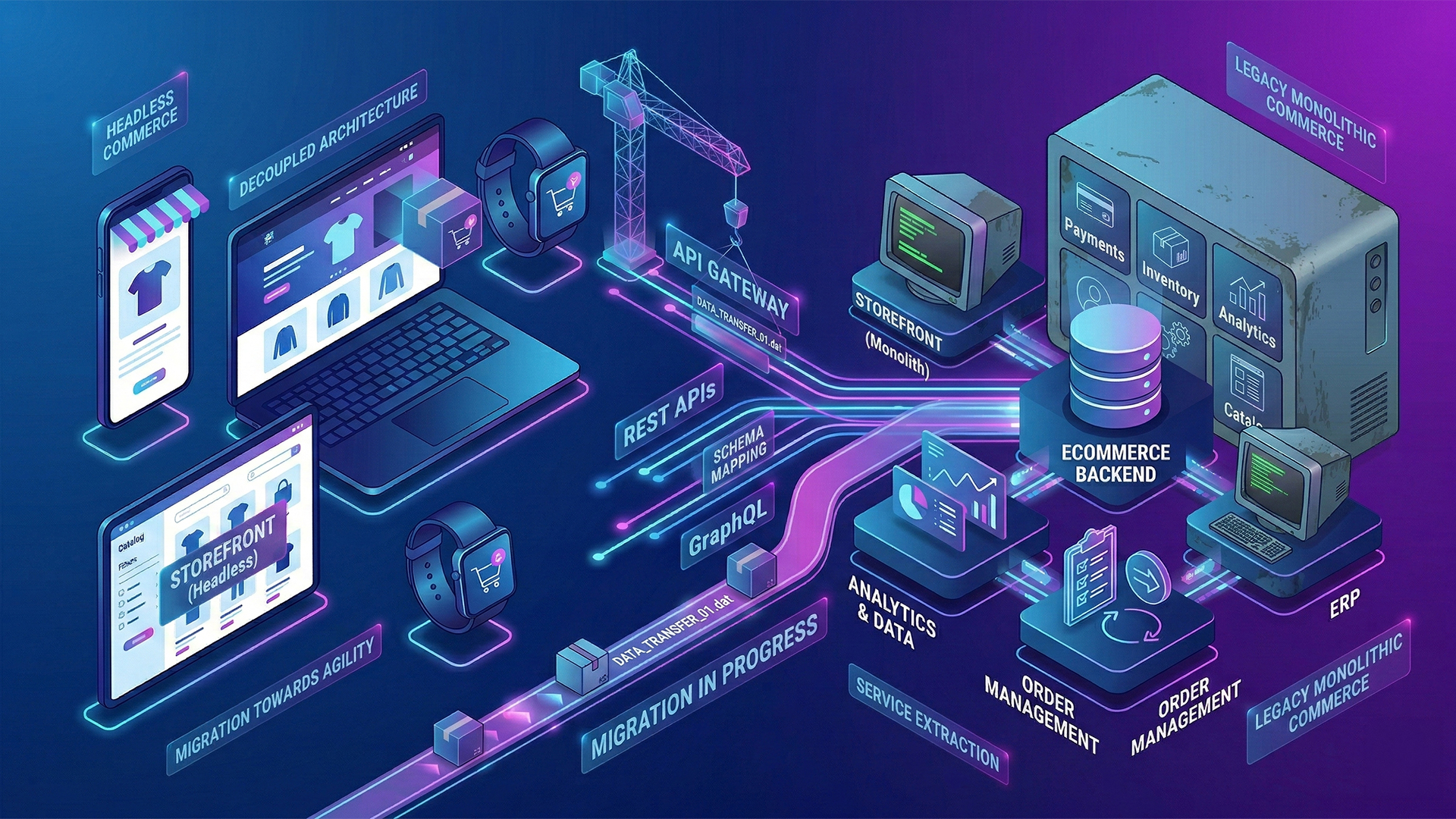
Complete Guide to Migrating Your eCommerce Platform to a Headless Architecture
9/3/2026
Business Development
Financial strategies to survive the high and low seasons of e-commerce
29/12/2025
Business DevelopmentE-commerce cash flow: why it's the biggest challenge (and how to solve it)
19/12/2025
Business Development

We build trust with every line of code: our path to ISO 27001:2022 certification
15/8/2025
Business Development
Service Management System What is it? and how it helps us deliver IT services
1/8/2025
Business Development
The Product Owner as a Strategic Link Between Business and Technology in eCommerce
3/6/2025
Business Development
Checklist for launching an eCommerce store: Everything you need before you start
15/5/2025
Business Development
Assertive Communication Between Agile Teams: Fostering Collaboration and Success
10/10/2024
Business Development

Introduction to Microfrontends: Decomposing the Complexity of Web Applications
17/7/2024
Business Development


Optimizing SUCCESS: The Importance of Performance Monitoring and Analysis in eCommerce Platforms
17/4/2024
Business Development


How to Create a Successful Business Case for the Migration of Your E-Commerce Platform
11/3/2024
Business Development

Agile Methodology: An Approach That Reduces the “Pain” of an Implementation
7/2/2024
Business Development


Contact us to discuss how our team
can boost your digital commerce.


