


Service Management System What is it? and how it helps us deliver IT services
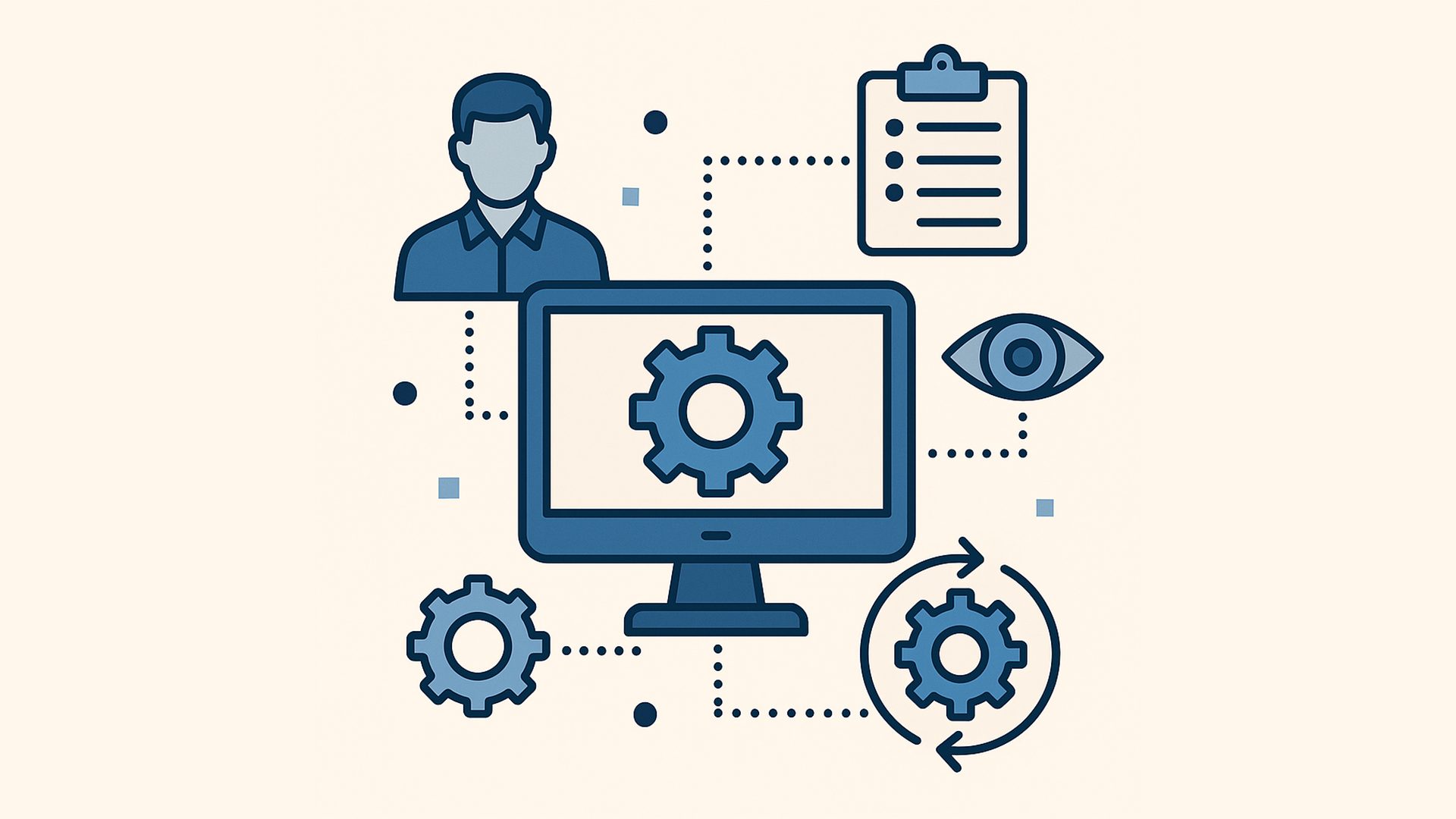
What is a Service Management System (SMS)?
A Service Management System (SMS) is a set of policies, processes, procedures and tools designed to plan, manage, deliver and continuously improve IT services within an organization. Its main objective is to ensure that IT services meet the needs of the business and end users, optimizing resources and providing value.
These systems are usually based on international standards, the best known being ISO/IEC 20000, which establishes the requirements that an SGS must meet to ensure quality and effectiveness in service management.
Key elements of an SGS
An SGS focuses on the efficient management of the entire lifecycle of IT services, including:
- Planning: Definition of objectives, policies and processes aligned with business strategy.
- Implementation and operation: Execution of management activities to provide stable and quality services.
- Monitoring and control: Evaluation of performance and service quality, identifying opportunities for improvement.
- Continuous improvement: Use of the PHVA (Plan, Do, Verify, Act) cycle to constantly adjust processes and services.
Benefits of an SMS
Implementing a Service Management System provides numerous advantages, such as:
Alignment with the business: IT services are designed and delivered with strategic goals in mind.
- Consistent quality: Standardized processes are established that ensure the delivery of reliable services.
- Resource optimization: Improves time management, costs and technical capabilities.
- Efficient risk management: Minimizes interruptions and problems through a preventive approach.
- Improved customer satisfaction: Increase end user confidence thanks to quality service.
- Regulatory compliance: Facilitates the adoption of best practices and compliance with applicable regulations.
How does an SGS help us deliver IT services?
A Service Management System (SMS) improves the quality, efficiency and value of services through standardized processes and best practices that optimize each phase of the service lifecycle. Implementing an SMS provides multiple benefits in the management and delivery of IT services.
Some of the ways you can help include:
- Improving service quality: By standardizing processes and applying controls, it is ensured that services are delivered in a consistent manner, complying with established service level agreements (SLAs). This reduces errors, downtime and technical failures.
- Alignment with the business: It helps align IT services with strategic business needs and objectives, ensuring that technology provides real value.
- Efficient incident and problem management: SMS implements clear processes for incident management and problem management, helping to:
- Resolve incidents quickly, minimizing impact on users.
- Identify and eliminate the root causes of recurring problems, avoiding their recurrence.
- Resource and cost optimization: Through monitoring and continuous improvement, SGS identifies areas where costs can be reduced without compromising service quality.
- Continuous improvement: The continuous improvement cycle (Plan, Do, Verify, Act - PHVA) allows services to be constantly evaluated and adjusted to adapt to changes in the environment or customer needs.
- Higher customer satisfaction: Thanks to processes focused on efficient delivery and proactive problem resolution, the customer experience improves, increasing customer satisfaction.
- Risk reduction: SMS helps manage and mitigate risks related to the security, availability and continuity of IT services. This decreases the likelihood of critical interruptions or cyberattacks.
Main processes managed by an SGS
A Service Management System is comprised of several processes that cover the entire life cycle of the service. Some of the most relevant are:
1. Incident Management
Objective: To restore normal operation of the service as quickly as possible after an incident and to minimize its impact on the business.
- What does it cover?
- Identifying, recording, classifying, escalating and resolving incidents.
- Effective communication with users throughout the incident lifecycle.
2. Problem Management
Objective: To identify and eliminate the root causes of recurring problems, minimizing the risk of future incidents.
- What does it cover?
- Root Cause Analysis (RCA).
- Implementation of permanent or temporary solutions (workarounds).
3. Change Management
Objective: To ensure that changes to the IT infrastructure are made in a controlled manner and with the least possible impact.
- What does it cover?
- Evaluation and authorization of changes.
- Planning and monitoring the impact of each change.
4. Configuration Management
Objective: Record, track and control all assets and configuration elements that are part of IT services.
- What does it cover?
- Creation and maintenance of the Configuration Management Database (CMDB).
- Relationship between configuration elements and critical services.
5. Service Level Management (SLA)
Objective: Define, measure and ensure that services comply with established Service Level Agreements (SLAs) between IT and the business.
- What does it cover?
- Monitoring service performance.
- Periodic SLA review and update according to customer needs.
6. Capacity Management
Objective: To ensure that IT resources are available in sufficient quantity to meet current and future business demands.
- What does it cover?
- Monitoring and analysis of resource use.
- Short- and long-term capacity planning.
7. Availability Management
Objective: Maximize the availability and uptime of business-critical services.
- What does it cover?
- Interrupt analysis.
- High availability and disaster recovery strategies.
8. Service Continuity Management
Objective: To ensure that critical services can continue to operate or be restored quickly in the event of disasters or serious interruptions.
- What does it cover?
- Development of continuity and disaster recovery (DRP) plans.
- Execution of simulations and periodic tests.
9. Information Security Management
Objective: To protect the confidentiality, integrity and availability of information handled by IT services.
- What does it cover?
- Implementation of security controls.
- Access management, vulnerability detection and response to cyber incidents.
10. Knowledge Management
Objective: To facilitate the capture, organization and reuse of knowledge within the organization to improve efficiency.
- What does it cover?
- Knowledge database for incident and problem resolution.
- Documentation of procedures and best practices.
Conclusion
A Service Management System is a key tool that helps improve operational efficiency, reduce costs, minimize risks, and ensure that the delivery of IT services is of high quality, consistent and aligned with business objectives.
Contact us to discuss how our team
can boost your digital commerce.
Notas Relacionadas

Complete Guide to Migrating Your eCommerce Platform to a Headless Architecture
9/3/2026
Business Development
Financial strategies to survive the high and low seasons of e-commerce
29/12/2025
Business Development
E-commerce cash flow: why it's the biggest challenge (and how to solve it)
19/12/2025
Business Development


We build trust with every line of code: our path to ISO 27001:2022 certification
15/8/2025
Business Development
Service Management System What is it? and how it helps us deliver IT services
1/8/2025
Business Development
The Product Owner as a Strategic Link Between Business and Technology in eCommerce
3/6/2025
Business Development
Checklist for launching an eCommerce store: Everything you need before you start
15/5/2025
Business Development
Assertive Communication Between Agile Teams: Fostering Collaboration and Success
10/10/2024
Business Development

Introduction to Microfrontends: Decomposing the Complexity of Web Applications
17/7/2024
Business Development


Optimizing SUCCESS: The Importance of Performance Monitoring and Analysis in eCommerce Platforms
17/4/2024
Business Development


How to Create a Successful Business Case for the Migration of Your E-Commerce Platform
11/3/2024
Business Development

Agile Methodology: An Approach That Reduces the “Pain” of an Implementation
7/2/2024
Business Development


Contact us to discuss how our team
can boost your digital commerce.


